

Mastering the Market: A Comprehensive Guide to HiBT Perpetual Swaps
In the dynamic world of cryptocurrency trading, perpetual swaps have emerged as one of the most popular and versatile instruments. For traders in Vietnam and beyond, understanding how to leverage these tools on platforms like HiBT can be a game-changer. This guide will demystify HiBT perpetual swaps for everyone, from curious newcomers to experienced investors.
What Exactly is a Perpetual Swap?
Imagine a futures contract that never expires. That’s the core idea behind a perpetual swap. It’s a derivative contract that allows you to speculate on the future price of an asset, like Bitcoin or Ethereum, without ever needing to take physical delivery. The price of the perpetual swap is designed to track the underlying spot market price closely.
How Do HiBT Perpetual Swaps Work?
Trading perpetual swaps on the HiBT platform involves a few key concepts:
- Long vs. Short: You can open a “long” position if you believe the price will rise, or a “short” position if you predict a fall.
- Leverage: This is a powerful feature that allows you to control a large position with a relatively small amount of capital. For example, with 10x leverage, a $100 investment controls a $1,000 position. Warning: Leverage magnifies both profits and losses.
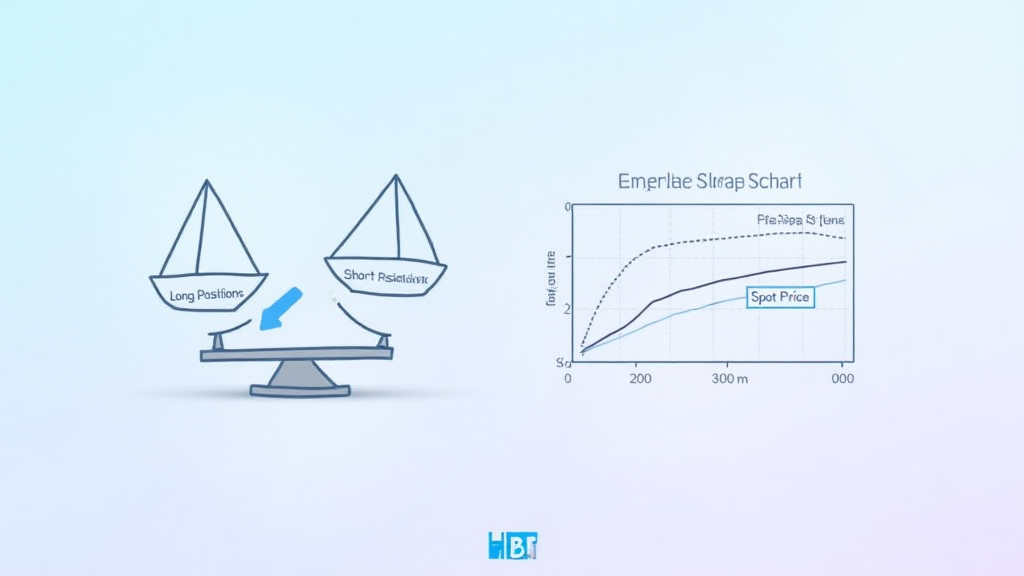
- Funding Rate: This is the unique mechanism that keeps the perpetual swap price pegged to the spot price. Periodically (e.g., every 8 hours), traders holding long positions pay funding to those holding short positions, or vice versa, depending on the difference between the perpetual swap price and the spot price.

Chart: How the funding rate mechanism balances long and short positions to anchor the price.
Why Trade Perpetual Swaps on HiBT?
Choosing the right platform is crucial. HiBT offers several advantages for perpetual swap traders:
- Deep Liquidity: Ensures you can enter and exit positions at desired prices without significant slippage.
- User-Friendly Interface: The platform is designed to be intuitive for beginners while offering advanced tools for pros.
- Robust Security: Protecting your assets is a top priority.
- Competitive Fees: Low trading fees help maximize your returns.
A Practical Case Study: Trading ETH on HiBT
Let’s look at a hypothetical scenario:
- Asset: Ethereum (ETH)
- Spot Price: $2,000
- Trader’s Prediction: Price will increase.
- Action: Opens a long position on the ETH/USDT perpetual swap with 5x leverage on HiBT.
- Capital: $1,000 (This controls a $5,000 position).
If the price rises to $2,200: The trader’s position is now worth $5,500. After closing the position and accounting for fees, the profit is significant compared to the initial capital. Without leverage, a $1,000 spot purchase would have only yielded a $100 profit.
If the price falls to $1,800: The loss is also magnified. This highlights the critical importance of risk management, including the use of stop-loss orders.
Risk Management is Non-Negotiable
While profitable, perpetual swap trading carries risks. Always:
- Use Stop-Loss Orders: Automatically close a position at a predetermined price to limit potential losses.
- Start Small: Especially if you are new, begin with low leverage and small amounts of capital.
- Diversify: Don’t put all your capital into a single trade.
- Understand Liquidation: If your position moves too far against you, it can be automatically liquidated, resulting in a total loss of your margin.
For those looking to deepen their understanding of advanced trading instruments and market dynamics, resources available on platforms like kalitecoin can be invaluable. You can explore more at hibt.com.
About the Author:
Dr. Anh Nguyen is a leading blockchain economist with over a decade of experience in digital asset markets. He has authored 25+ research papers on cryptocurrency derivatives and market microstructure. Dr. Nguyen was the lead auditor for the risk management system of the “Saigon Digital Asset Exchange” project, ensuring its stability and security for Vietnamese traders. His insights are regularly sought by financial institutions across Southeast Asia.


